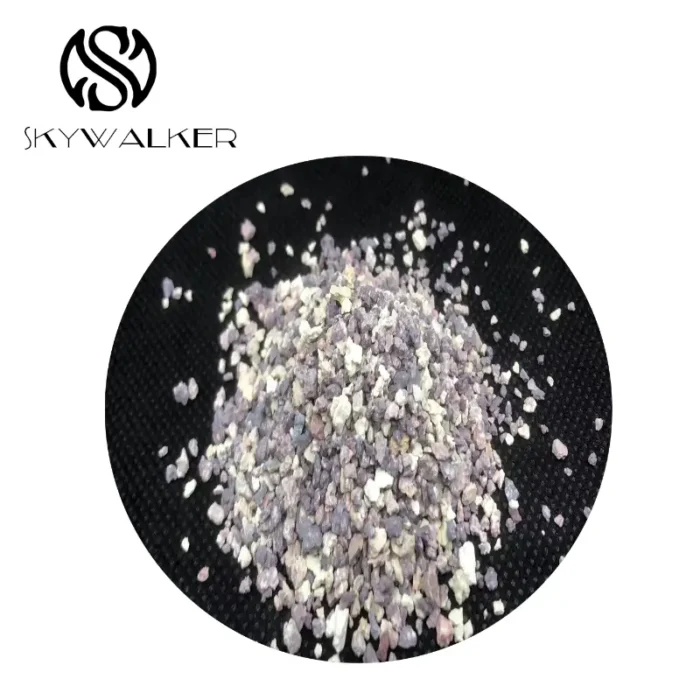
Embarking
Taking an manufacturing outlook, siliceous material and screening medium indicate each critical piece in several methods across the vast range of fields. It has been noted that stable performance depends on acknowledging the specific traits of the component – its granule size, breathability, and filtration speed. Calibrating these elements is essential to gaining desired purity and capability in the filtration system. Additionally, supervising airborne particles is a substantial point for employee well-being and ecological adherence.
Pinpointing Perfect Filter Aid Supplier
Securing a reputable diatomite supplier for screening procedures can significantly shape product standards and system output. Review component standards, grain scale, accessibility, charge, and service efficiency before selecting. Do not disregard application knowledge and shipping abilities – a superior seller provides beyond basic goods. Ultimately, forming a durable alliance with a seasoned diatomite filtering enterprise will support your enduring accomplishment.
Alternative Purposes of Diatomaceous Earth Past Filtering
Despite being widely known for its involvement in screening procedures, silica sediment contains truly large other functionalities. Separated from fluid industries, this natural element benefits landscaping, providing effective pest defense and ground provision. Also, its exceptional permeable structure proves beneficial for animal diet, promoting nutrient uptake. Consumers observe this compound in personal care items acting as a gentle abrasive or desiccant enhancer. Basically, the diversity of this earth amazes knowledgeable experts.
- Landscaping
- Feedstuff
- Personal Care
Controlling Quality in Diatomite Aid Processing
Sustaining steady quality levels in filtration aid manufacturing involves comprehensive evaluation processes. These audits originate from the crude element, including scrutiny of particle distribution, porosity, and humidity degree. Across milling and firing procedures, ongoing analysis of brightness, loose density, and fluidity is indispensable. Finished compound shipments endure wide-ranging testing according to consistent protocols, often including grain measurement through optical scattering and surface area determination.
- Attestation of highest purity is fundamental
- Scheduled inspections of processes are carried out
- Documentation of substance origin persists
Worldwide Diatomite Industry: Analysis and Suppliers
The international siliceous earth industry now sees considerable advancement prompted by growing need within diverse markets. Principal tendencies include boosted utilization in purification functions, crop pest control, and as drying agents. Several distinguished businesses frequently dedicate capital to research initiatives for improving product attributes and enlarging clientele. Leading corporations such as EP Minerals, Imerys, Grant Prideaux bear essential responsibility in molding the destiny of diatomaceous market.
Choosing a Celite Screening Agent: Key Aspects
While choosing a celite screening agent for your application, important elements require evaluation. The grain spread is crucial, strongly affecting filtering speed and purity of the refined fluid. Think about the screening equipment's strain tolerance; broader types suit reduced forces, whereas finer varieties tolerate increased stress. Likewise, the celite's purity and thickness alter operational properties. Finally, scrutinize price and accessibility of assorted types to boost filtering results.
- Particle Size Distribution
- Machinery Force Capability
- Cleanness and Compactness
- Expense and Supply Condition
Sustainable Acquisition of Diatomite
Securing extended viability of DE gathering involves a concentrated promise to environmentally friendly sourcing approaches. Classically, silica mining brought environmental problems such as habitat disturbance and water consumption. Henceforth, forward-looking vendors integrate measures alleviating those effects. These practices involve restoring excavated terrain, protecting resources, and aiding regional populations. Additionally, sustainable sourcing can entail calcined diatomite accreditations from autonomous entities, evidencing observance of harsh environmental mandates.- Emphasis on area restoration
- Slashing liquid usage
- Promoting community expansion
Filtration Aid Substance: Advancing Filtering Procedures
Filtration aid compound works as a clarifying medium, substantially elevating filtering performance for wide-scale applications. The pulverized silica forms a porous cake atop filtering material, allowing extraction of fine solids from slurries. Therefore, purity increases and the entire operation becomes more productive.Studying Diatomaceous Material and Processing Techniques
Silica sediment, also termed fossilized powder, consists of sedimentary earth built from microscopic algae remains. Its unique structure provides exceptional absorbent qualities|Its distinctive composition delivers remarkable filtering properties|Its specialized makeup grants outstanding abrasive features|Its characteristic formation offers extraordinary absorbency traits|Its individual configuration yields superior filtering abilities|Its peculiar composition presents exceptional abrasive qualities|Its exclusive structure affords outstanding absorbent features|Its special makeup supplies remarkable filtering properties}. The manufacturing of diatomite begins with mining from open-pit mines|The production of siliceous earth starts with extraction from surface quarries|The processing of diatomaceous material initiates with excavation from open deposits|The fabrication of silica sediment originates with mining at surface pits|The creation of diatomite commences with quarrying from open-pit sites|The synthesis of siliceous material starts with surface mining|The making of diatomaceous earth begins with excavation of open deposits|The formation of silica earth starts with quarrying surface mines}. The raw material is then crushed and washed to remove impurities|The unprocessed substance is subsequently broken and cleaned to eliminate contaminants|The crude product undergoes grinding and rinsing to discard debris|The natural material is pulverized and cleaned to reject impurities|The unrefined matter is crushed and washed to clear contaminants|The original compound is ground and cleansed to eradicate debris|The raw component is broken down and rinsed to remove impurities|The crude sample is pulverized and cleaned to eliminate contaminants}. Following washing, material undergoes drying to reduce moisture content|After cleaning, substance experiences evaporation to lessen dampness level|Post rinsing, product endures heat treatment to decrease water amount|Following cleansing, compound passes drying phase to cut down moisture presence|After washing, material goes through evaporation process to lower dampness content|Post cleaning, matter undergoes heating phase to reduce water level|Following rinsing, product experiences drying step to minimize moisture amount|After purification, substance passes heat treatment to decrease water presence}. Finally, it is milled into various sizes to meet application needs|Ultimately, it is ground into different grades to satisfy diverse demands|Concluding, it is pulverized into specific ranges to fulfill usage requirements|Eventually, it is milled into assorted distributions to accommodate different uses|In the end, it is ground into multiple sizes to adapt to application specifications|Finally, it is pulverized into varied grades to meet demand characteristics|Ultimately, it is milled into distinct ranges to fit use requirements|Eventually, it is ground into assorted distributions to conform with application needs}.